
TL;DR:
- Wedding invitations set guest expectations and influence their overall experience.
- Digital invitations offer cost savings, eco-friendliness, and interactive multimedia features.
- A hybrid approach can balance tradition, convenience, and guest preferences effectively.
Your wedding invitation is not a formality. It is the first moment your guests experience your wedding, and it shapes everything from their excitement to their travel plans. Couples who treat invitations as just another checkbox often find themselves chasing RSVPs, managing last-minute confusion, and spending far more than necessary. Modern digital invitations change that equation entirely, offering real savings, eco-friendly delivery, and interactive features that paper simply cannot match. This guide walks you through every format, feature, and decision point so you can choose what works best for your wedding and your guests.
Table of Contents
- Why wedding invitations matter: More than just details
- Digital vs. paper invitations: Pros, cons, and real cost savings
- Innovative features: Customization and multimedia enhance the experience
- Mastering RSVP and guest management: Tools and strategies
- Finding the best fit: When to use digital, print, or both
- Our perspective: Why the invitation is your first and last impression
- Explore your digital invitation options with The Digital Yes
- Frequently asked questions
Key Takeaways
| Point | Details |
|---|---|
| Setting the wedding tone | Invitations communicate your wedding’s style and expectations before the big day. |
| Modern digital advantages | Digital invites offer cost savings, environmental benefits, and instant RSVP tracking. |
| Hybrid solutions work best | Combining digital and print invitations accommodates all guests while maximizing efficiency. |
| Customization engages guests | Personalized digital features like videos and maps make invitations memorable and clear. |
Why wedding invitations matter: More than just details
Most couples underestimate what an invitation actually does. It is not just a piece of paper or a digital card with the date and venue. It is your guests' first interaction with your wedding, and it sets every expectation they will carry into the event itself.
A well-crafted invitation tells guests whether your wedding is a black-tie affair or a barefoot beach ceremony. It signals the level of formality, the dress code, and even the emotional tone of the day. As formally documented, wedding invitations request attendance, set the event tone, and provide essential details like date, time, venue, dress code, and RSVP instructions. That is a lot of work for one card.
The classic invitation suite typically includes several components working together:
- Main invitation card: The core announcement with date, time, and venue
- RSVP card or link: How guests confirm attendance and meal preferences
- Details card: Accommodations, transportation, dress code, and registry
- Envelope or digital wrapper: The first visual impression guests receive
Timing matters enormously here. Sending invitations 6 to 8 weeks before your wedding gives guests enough time to book travel, arrange childcare, and respond without feeling rushed. For destination weddings, push that to 12 weeks minimum.
"Your invitation is not just stationary. It is the opening scene of your wedding story, and guests read it that way whether you intend them to or not."
One common mistake couples make is focusing entirely on aesthetics while neglecting clarity. Beautiful design means nothing if guests cannot quickly find the ceremony time or understand how to RSVP. The best invitation examples balance visual impact with clean, scannable information that guests can act on immediately.
Think of your invitation as a guest experience tool. Every element, from font choice to the RSVP deadline, communicates something about how you value your guests' time and effort. Getting this right from the start reduces confusion, last-minute calls, and avoidable stress.
Digital vs. paper invitations: Pros, cons, and real cost savings
The format debate is real, but the numbers tell a clear story. Digital invitations cost between $50 and $200 for 150 guests, compared to $600 or more for traditional printed suites. That gap alone makes the conversation worth having.
But cost is only part of it. Here is a direct comparison of what each format delivers:
| Feature | Digital | Paper |
|---|---|---|
| Cost for 150 guests | $50 to $200 | $600 or more |
| RSVP tracking | Real-time, automated | Manual, time-consuming |
| Multimedia (video, maps) | Yes | No |
| Environmental impact | Minimal | Significant paper waste |
| Delivery speed | Instant | 5 to 10 days |
| Guest preference | Growing | Still majority |
The environmental case is strong. Traditional printing involves paper production, ink, shipping, and eventual disposal. Eco-friendly delivery options for digital invitations eliminate nearly all of that footprint. If reducing your wedding's environmental impact matters to you, this is one of the most impactful switches you can make. You can read more about how to reduce wedding waste across your entire planning process.
The honest trade-off is guest comfort. Survey data shows that 62% of couples still print invitations, 29% go digital-only, and 9% use a hybrid approach, while 77% of guests say they prefer receiving a printed invite. That preference is real and worth respecting, especially for older guests or very formal events.
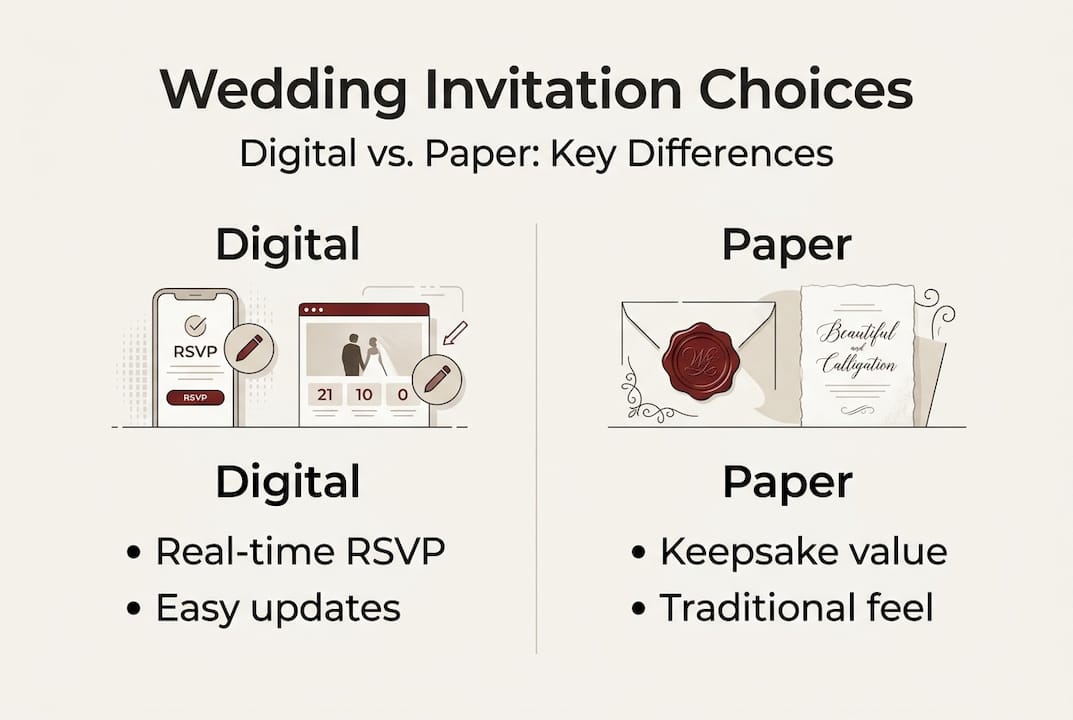
Digital invitations also unlock features that paper simply cannot offer: embedded video messages, animated designs, interactive maps, and automated RSVP reminders. These are not gimmicks. They genuinely improve the guest experience and reduce the back-and-forth that traditional invitations create.
Pro Tip: If you are worried about going fully digital, start with cost-saving invitation ideas that blend both formats. Send a simple printed card with a QR code that links to a full digital invitation experience.
The key benefits of digital invitations at a glance:
- Instant delivery to any location worldwide
- Real-time RSVP updates without manual tracking
- Ability to send updates or corrections without reprinting
- Significantly lower cost per guest
- Reduced paper waste and carbon footprint
Innovative features: Customization and multimedia enhance the experience
Digital invitations have moved well beyond a simple email with event details. Today's platforms let you build an experience that reflects your wedding's personality before guests ever arrive.
You can match your invitation's design to your wedding theme precisely, whether that means a minimalist palette, a floral watercolor aesthetic, or a bold modern layout. Modern invitation templates give you a starting point, but full customization means your invitation feels original, not generic.
The multimedia possibilities are where digital truly separates itself. Digital invitations enable embedded videos, animations, and interactive maps personalized for each guest. Imagine guests opening your invitation and watching a short video of you both announcing the wedding, followed by a tap-to-navigate map to your venue. That experience is simply not possible with paper.

Here is a breakdown of the most impactful digital features:
| Feature | Guest benefit | Couple benefit |
|---|---|---|
| Embedded video | Personal, emotional connection | Sets tone before the event |
| Interactive map | Easy navigation, no confusion | Fewer "where is it?" messages |
| Animated design | Memorable, shareable | Reflects wedding personality |
| Automated reminders | Never miss the RSVP deadline | Reduces follow-up effort |
| Personalized RSVP links | Clear plus-one and kids info | Accurate headcount faster |
Personalized RSVP links are particularly underrated. When each guest receives a unique link, you eliminate the confusion around plus-ones, children's attendance, and meal choices. Guests see exactly what applies to them, and you get clean, organized data on the other end.
Pro Tip: Use invitation automation tips to schedule reminder messages at 4 weeks, 2 weeks, and 1 week before your RSVP deadline. This alone can increase response rates by a significant margin without any manual effort.
Automated updates are another quiet advantage. If your venue changes, your ceremony time shifts, or you need to add a shuttle service, you can push that update to every guest instantly. With paper, a change means a reprint, a new mailing, and added cost.
Mastering RSVP and guest management: Tools and strategies
RSVP management is where most couples feel the most stress, and it is also where digital invitations deliver their clearest advantage. The old process of waiting for paper cards to return, then manually tallying responses, is genuinely exhausting.
Digital invitations enable real-time RSVP tracking, automated reminders, and organized guest data all in one place. You can see at a glance who has responded, who has not, and what meal choices have been made.
Here is a practical RSVP management process that works:
- Send invitations with a clear RSVP deadline at least 3 to 4 weeks before your final vendor counts are due
- Number each invitation on the back or in the system so you can match responses to guests easily
- Set automated reminders for non-responders at the 2-week and 1-week marks
- Collect all information at once: meal preferences, dietary restrictions, accessibility needs, and song requests
- Export your final guest list in a format your caterer and venue can use directly
Beyond headcounts, digital RSVP tools let you gather information that improves the guest experience. You can ask for song requests, collect accessibility requirements, or even let guests share a memory or message as part of their response.
"The couples who have the smoothest wedding days are almost always the ones who locked down their guest list data early and completely."
For RSVP confirmation tips that reduce last-minute chaos, set your RSVP deadline one week earlier than you actually need the final count. This gives you a buffer to chase stragglers without panicking. You can also explore RSVP tracking strategies and ways to manage guest responses more efficiently.
Pro Tip: Use your platform's RSVP automation guide to build a sequence that handles follow-ups without you lifting a finger. Automation is not impersonal. It is respectful of everyone's time.
Finding the best fit: When to use digital, print, or both
There is no single right answer here. The best approach depends on your guest list, your wedding style, and your priorities as a couple.
Hybrid strategies work well when you want the tone-setting power of print combined with the efficiency of digital RSVP and multimedia. Print a beautiful main card, then direct guests to a digital experience for all the details, updates, and responses.
Here is when to lean toward each format:
- Print only: Very formal or black-tie events, guests with limited tech access, situations where keepsake value matters
- Digital only: Tech-savvy guest lists, destination weddings, international guests, tight budgets, eco-conscious couples
- Hybrid: Mixed guest demographics, couples who want both aesthetics and efficiency, large guest lists
Edge cases matter too. Older guests or those with technology barriers genuinely prefer and deserve a printed invitation. Formal or black-tie events often carry an expectation of a tangible invite. Destination weddings, on the other hand, are ideal for digital because guests need detailed logistics, maps, and accommodation information that a single card cannot hold.
For hybrid invitation strategies that balance both worlds, consider printing only for guests who specifically need it and going fully digital for everyone else. This reduces waste and cost while honoring your guests' preferences.
Pro Tip: Before sending anything, test your digital invitation on multiple devices, including older smartphones and tablets. Verify every email address on your list. A bounced invitation is worse than no invitation at all.
Our perspective: Why the invitation is your first and last impression
We have seen thousands of weddings unfold through the lens of their invitations, and one pattern holds true every time. The couples who treat their invitation as a genuine communication tool, not just a design project, consistently report smoother events and happier guests.
Paper invitations carry prestige, but they are static. Once they leave your hands, they cannot be updated, corrected, or expanded. Digital invitations are living documents. They grow with your planning and keep guests informed without extra effort.
What surprises most couples is how much anticipation a well-crafted digital invitation builds. A short video, a personalized message, an animated reveal. These moments create emotional connection before the wedding even begins. That is not a small thing. That is the magic that paper lost somewhere along the way.
We believe the invitation is not just the first impression. It is also the last thing guests remember when they think about how organized and thoughtful you were as hosts. Explore creative invitation ideas that leave that kind of lasting mark.
Explore your digital invitation options with The Digital Yes
If this guide has shifted how you think about your invitations, the next step is finding a platform that can actually deliver on these possibilities. At The Digital Yes, we build modern, customizable digital wedding invitations designed to impress guests and simplify your planning.
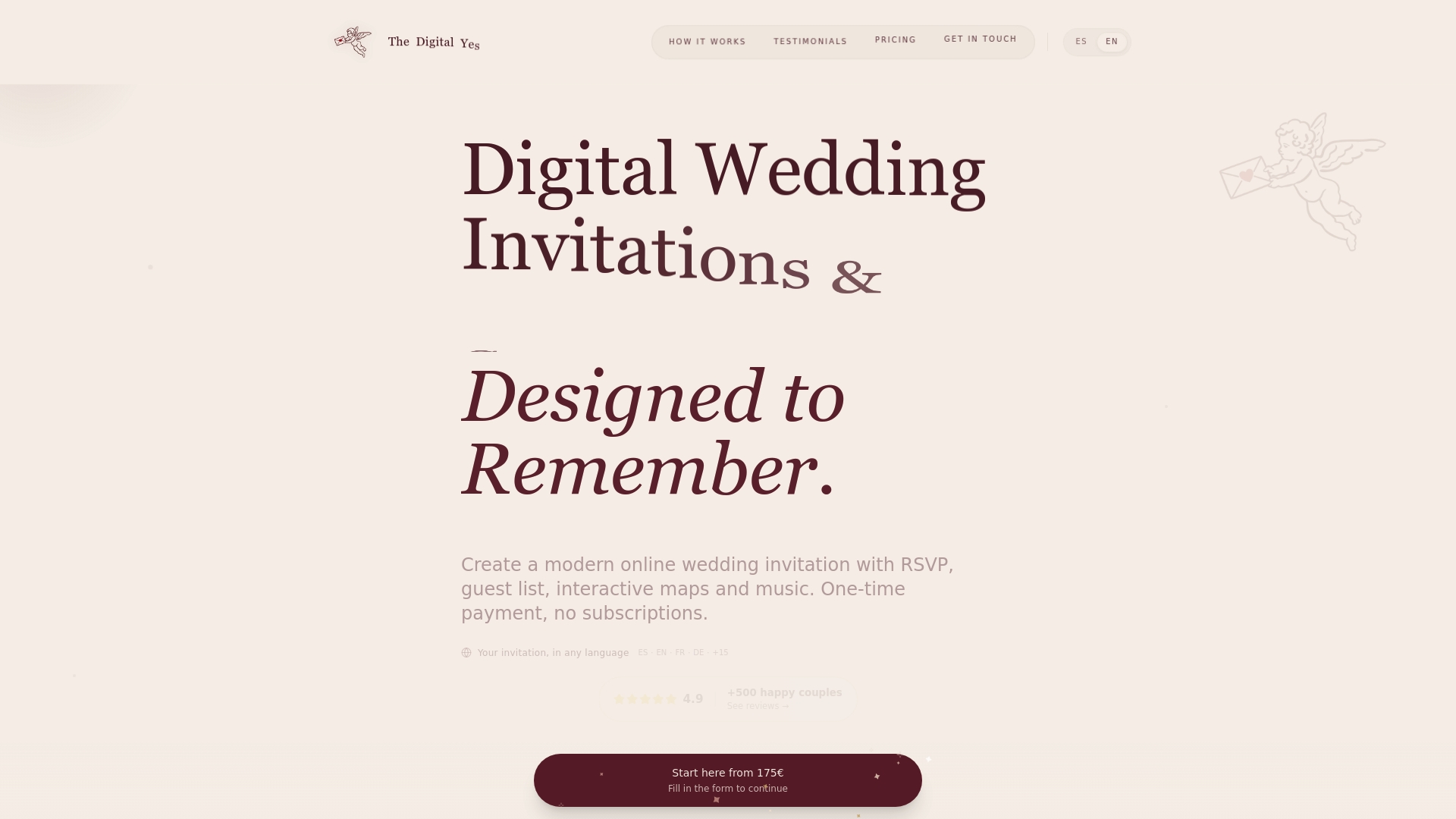
Every invitation includes real-time RSVP tracking, automated reminders, multimedia embedding, and full design customization to match your wedding's unique style. There are no recurring subscriptions, just a one-time investment in an invitation experience your guests will remember. Whether you want a template-based design or something completely bespoke, we have options that fit your vision and your budget. Start creating your invitation today and give your guests the first impression your wedding deserves.
Frequently asked questions
How early should we send wedding invitations?
Send invitations 6 to 8 weeks before your wedding date to give guests adequate time to plan travel, arrange schedules, and respond before your RSVP deadline. For destination weddings, 12 weeks is a safer window.
Are digital invitations considered formal enough for weddings?
A beautifully designed digital invitation can absolutely feel formal and elegant, but for very traditional or black-tie events, a printed invite still carries the expected weight and prestige.
Can we track RSVPs better with digital invitations?
Yes. Digital RSVP tools give you instant visibility into who has responded, who has not, and what preferences guests have submitted, all without manual tracking or follow-up phone calls.
What about guests who don't use email or prefer keepsakes?
A hybrid approach handles this well. Send printed invitations to guests who prefer a tangible keepsake or have limited technology access, and use digital for everyone else to maximize efficiency.
Is it eco-friendly to skip paper invitations entirely?
Yes. Going fully digital significantly reduces paper waste, ink use, and shipping emissions compared to traditional printed suites, making it one of the easiest eco-friendly choices in wedding planning.