

Planning your wedding invitations shouldn't drain your budget or compromise your personal style. Many engaged couples struggle to balance the expense of traditional printed invites with their desire for unique, memorable designs that reflect their personalities. Postage costs can vary from $0.68 to $2 per invite depending on size and embellishments, and that's before factoring in printing, paper quality, and design fees. This guide walks you through evaluation criteria, creative cost-saving strategies, and comparison frameworks to help you choose wedding invitations that delight your guests while keeping your budget intact. You'll discover how digital innovation and thoughtful personalization combine to create invitations that are both affordable and unforgettable.
Table of Contents
- How To Evaluate Wedding Invitations For Savings And Style
- Top Cost-Saving Wedding Invitation Ideas In 2026
- Comparing Digital, Traditional, And Hybrid Wedding Invitations
- When To Choose Each Wedding Invitation Style: Situational Recommendations
- Explore Digital Wedding Invitations To Save And Personalize
- Are Digital Invitations Recognized As Formal Enough For Weddings?
- How Can I Add Personal Touches To A Digital Wedding Invitation?
- What Factors Influence The Cost Difference Between Printed And Digital Invitations?
Key takeaways
| Point | Details |
|---|---|
| Cost drivers | Postage, printing style, and embellishments significantly impact invitation expenses |
| Digital advantages | Digital invitations reduce costs dramatically and enable animations, videos, and RSVP tracking |
| Hybrid approach | Print invites for VIPs and send digital versions to other guests to balance tradition and savings |
| RSVP management | Digital tools simplify guest tracking and eliminate follow-up communication costs |
| Informed decisions | Comparing options by cost, personalization, and guest experience helps you choose the best fit |
How to evaluate wedding invitations for savings and style
Before you commit to any invitation style, establish clear criteria that align with your budget and wedding vision. Start by understanding the cost drivers: postage surcharges for square envelopes, heavy cardstock, or decorative elements like wax seals can push expenses from affordable to astronomical. Postage costs can vary from $0.68 to $2 per invite depending on size and embellishments, so envelope shape and weight matter more than you might expect. Printing techniques such as foil stamping, letterpress, or embossing add visual appeal but also multiply your per-unit cost.
Digital invitations flip the script entirely by eliminating printing and postage while introducing interactive features like embedded videos, animations, background music, and real-time wedding RSVP tracking. These tools let you personalize each invite with dynamic content that printed cards simply can't match. You can include clickable maps to your venue, photo galleries showcasing your engagement story, and multi-language text to welcome guests who speak different languages.
Consider your guest demographics carefully. Older relatives or traditionalists may cherish a physical keepsake they can display on their refrigerator, while tech-savvy friends will appreciate the convenience of digital RSVPs and calendar integration. Your wedding's formality level also influences perception: black-tie affairs traditionally lean toward printed invitations, but modern design capabilities allow digital formats to achieve elegance and sophistication.
Pro Tip: Create a simple spreadsheet listing your must-have features, budget ceiling, and guest preferences to guide your decision-making process objectively.
Evaluation checklist:
- Postage weight and surcharge potential
- Printing method and embellishment costs
- Personalization options like videos or animations
- Guest technology comfort levels
- Wedding formality and tone requirements
- RSVP tracking and follow-up ease
- Environmental impact priorities
Top cost-saving wedding invitation ideas in 2026
The most dramatic savings come from embracing fully digital invitations. Digital invitations totaled roughly $300 for 150 guests compared to $4,000 for foil-stamped printed invites, a difference that could fund your honeymoon or upgrade your catering package. Digital platforms let you design bespoke invitations featuring your engagement photos, custom animations of your love story, and even video messages that play when guests open the invite. These premium wedding invitations features create an immersive experience impossible to replicate on paper.
A hybrid strategy offers the best of both worlds for couples torn between tradition and innovation. Print high-quality invitations for immediate family members, wedding party participants, and VIP guests who value tangible keepsakes, then send digital invitations add personal touches with video and animations to everyone else. This approach respects different preferences while cutting your overall printing and postage budget by 60 to 80 percent. You maintain the formality and sentiment for those who matter most without breaking the bank.
DIY printable templates represent another cost-effective path if you enjoy creative projects and have time to invest. Download professionally designed templates, customize them with your wedding details, and print them at home or through an affordable online print service. Skip heavy cardstock, wax seals, and ribbon embellishments that trigger postage surcharges. Simple, elegant designs on standard-weight paper keep costs low while still delivering a polished look.

Digital RSVP management eliminates the need for return envelopes, additional postage, and manual tracking spreadsheets. Guests click a button to confirm attendance, select meal preferences, and note dietary restrictions instantly. You receive real-time updates without chasing down late responses or deciphering handwritten notes.
Pro Tip: If your guest list includes non-English speakers, leverage multi-language support in digital invitations to make everyone feel welcomed and informed from the start.
Budget-friendly invitation strategies:
- Use bespoke digital invitations with video and animation capabilities
- Print only for VIPs and send digital to remaining guests
- Choose DIY printable templates with minimal embellishments
- Avoid square envelopes and wax seals to reduce postage
- Implement digital RSVP tracking to save follow-up costs
- Incorporate multi-language options for diverse guest lists
Comparing digital, traditional, and hybrid wedding invitations
Understanding the trade-offs between invitation styles helps you make confident choices aligned with your priorities. Digital invitations cost substantially less than premium printed options, with added RSVP management features that streamline guest communication. Traditional printed invitations offer tactile appeal and serve as physical mementos guests can treasure, but they require longer production timelines and incur significant postage expenses. Some couples prefer a hybrid model to balance digital convenience and printed elegance for VIPs, creating a tiered approach that respects different guest expectations.
| Feature | Digital | Traditional Print | Hybrid | | --- | --- | --- | | Average cost (150 guests) | $200-$400 | $2,000-$5,000 | $800-$1,800 | | Personalization | Videos, animations, music, interactive maps | Custom printing, embossing, foil stamping | Both digital features and printed elegance | | Guest experience | Instant delivery, easy RSVP, eco-friendly | Tangible keepsake, formal presentation | VIPs receive printed, others digital | | Management ease | Real-time tracking, automated reminders | Manual RSVP collection, follow-up calls | Mixed tracking methods | | Environmental impact | Minimal paper waste, zero shipping | High paper and transport footprint | Reduced but not eliminated | | Turnaround time | Hours to days | 4-8 weeks | 3-6 weeks for printed portion |
Digital invitations excel when you want maximum flexibility and immediate distribution. You can update venue details, add last-minute information, or send reminders without reprinting anything. The interactive nature keeps guests engaged: they can explore photo galleries, watch your proposal video, and access multi-language wedding invitations that make international guests feel included.
Traditional print shines for formal, black-tie events where physical presentation matters. The weight of premium cardstock, the shimmer of foil accents, and the texture of letterpress printing communicate elegance in ways screens cannot replicate. However, these sensory details come with premium price tags and inflexible timelines.
Hybrid approaches let you honor tradition for close family while embracing modern efficiency for extended networks. You satisfy different generational preferences and maintain budget control by limiting expensive printed invitations to a select group. This strategy also simplifies logistics: organize wedding guest responses digitally for most attendees while handling a smaller volume of mailed RSVPs.
Quick comparison highlights:
- Digital: lowest cost, fastest delivery, highest interactivity
- Traditional: premium presentation, physical keepsake, highest expense
- Hybrid: balanced approach, respects preferences, moderate cost
When to choose each wedding invitation style: situational recommendations
Your unique circumstances should drive your invitation choice more than trends or assumptions. Choose fully digital invitations if you're working with a tight budget, planning a destination wedding where guests need instant access to travel information, or prioritizing environmental sustainability. Digital invitations uniquely allow creative, dynamic elements with cost savings that can redirect funds toward other wedding priorities like photography, florals, or entertainment.
Traditional printed invitations make sense when your wedding follows formal conventions, your guest list skews older and less tech-comfortable, or you want physical invitations as part of your wedding memorabilia collection. If budget isn't a primary constraint and you value the ritual of mailing elegant cards, printed invitations deliver that experience.
Hybrid models work best when you have distinct guest tiers: immediate family and wedding party members who expect printed keepsakes, plus a larger circle of friends and extended family comfortable with digital communication. This approach also suits couples who want to test digital features without fully abandoning tradition.
Scenario-based recommendations:
- Budget under $500 for 150 guests: Go fully digital with digital wedding invitations with RSVP to maximize savings
- Formal black-tie wedding with traditional guests: Choose printed invitations with classic design elements
- Destination wedding requiring detailed travel info: Digital invitations with embedded maps and accommodation links
- Mixed-age guest list with varied tech comfort: Hybrid approach with printed for older relatives, digital for younger guests
- Eco-conscious couple prioritizing sustainability: Digital invitations eliminate paper waste and shipping emissions
- Short planning timeline (under 3 months): Digital invitations offer instant delivery and quick design turnarounds
Wedding planners increasingly recommend digital invitations for couples seeking creative freedom and budget flexibility. The ability to incorporate videos, animations, and interactive elements creates memorable experiences that static printed cards cannot match.
Pro Tip: Before committing to your invitation style, send digital preview versions to a small group of trusted friends representing different age groups and tech comfort levels to gauge their reactions and identify any usability issues.
Explore digital wedding invitations to save and personalize
Ready to implement the cost-saving strategies and personalization features discussed throughout this guide? The Digital Yes specializes in digital wedding invitations with RSVP tracking that combines affordability with creative freedom. You can design bespoke invitations featuring your engagement videos, custom animations that tell your love story, and background music that sets the perfect tone. The platform includes comprehensive RSVP management tools that automatically track responses, send reminders to guests who haven't replied, and export your final guest list for catering and seating arrangements.
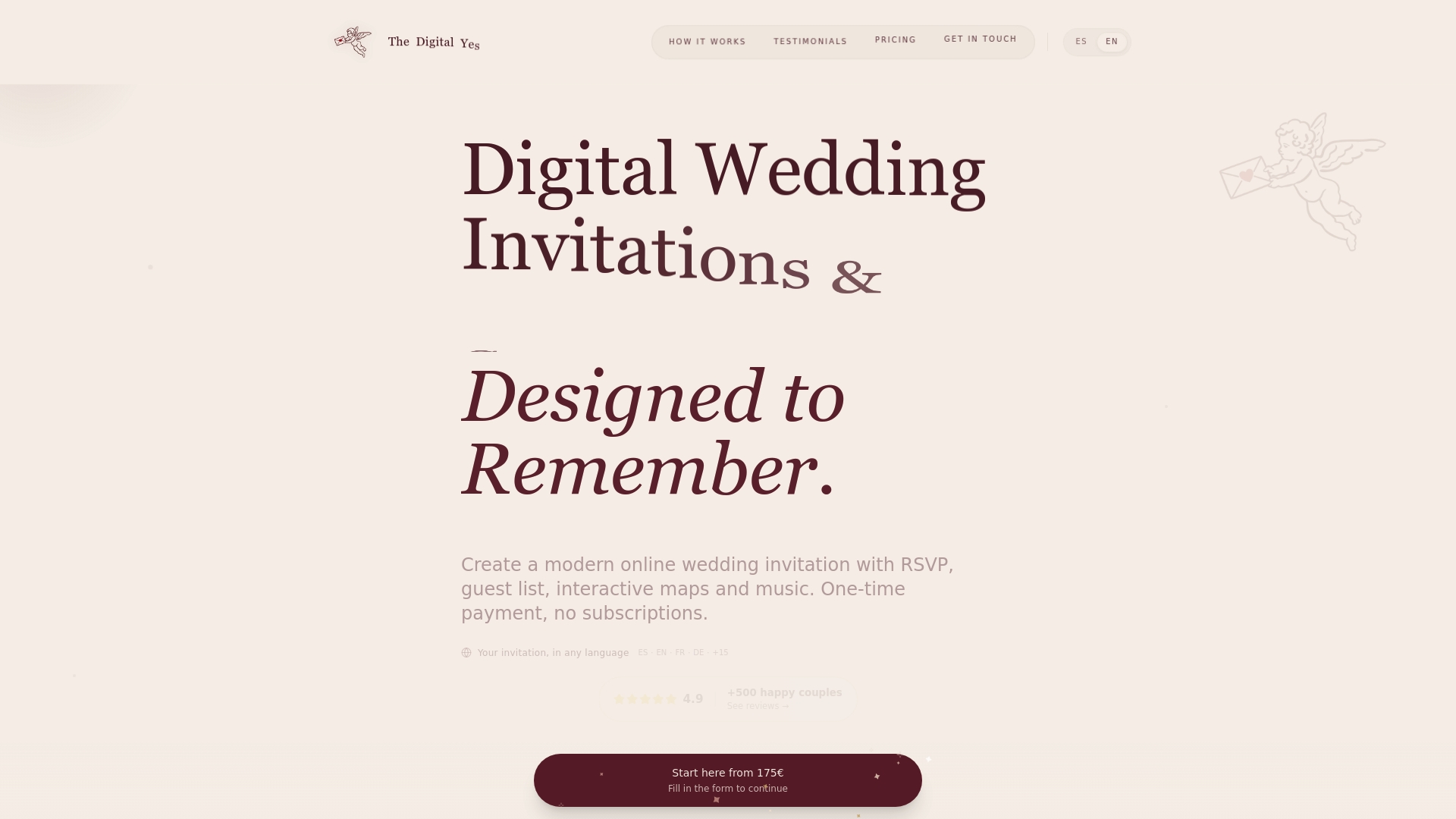
Pricing starts at a fraction of premium printed invitation costs, helping couples save thousands of dollars that can enhance other wedding elements. Multi-language support ensures every guest feels welcomed regardless of their native language, while embedded maps and accommodation details simplify travel planning for out-of-town attendees. The one-time payment model means no recurring subscriptions, just a straightforward investment in invitations that work as hard as you do to create an unforgettable wedding experience.
Are digital invitations recognized as formal enough for weddings?
Can digital invitations look elegant and formal?
Absolutely. Modern digital invitation platforms offer sophisticated design templates with elegant typography, refined color palettes, and tasteful animations that convey formality beautifully. You control every visual element to match your wedding's tone, from classic and traditional to contemporary and artistic.
Do etiquette experts approve of digital wedding invitations?
Wedding etiquette has evolved significantly, and most experts now recognize digital invitations as acceptable for all but the most ultra-traditional ceremonies. The key is ensuring your digital design reflects the same care and thoughtfulness you would invest in printed invitations.
How do guests typically respond to receiving digital invitations?
Younger guests and tech-savvy attendees generally prefer digital invitations for their convenience and interactive features. Older guests may initially feel surprised but usually appreciate the ease of one-click RSVPs once they experience the process. Clear instructions help ensure everyone can engage comfortably.
Should I send printed invitations to certain guests and digital to others?
This hybrid approach works perfectly for couples wanting to honor traditional preferences while embracing modern efficiency. Send printed invitations to immediate family, elderly relatives, or anyone who has expressed a preference for physical mail, then use digital versions for remaining guests. This respects different comfort levels without inflating your budget unnecessarily.
How can I add personal touches to a digital wedding invitation?
What multimedia elements make digital invitations feel personal?
Videos showing your proposal or engagement photo shoot, custom animations illustrating your relationship timeline, and carefully selected background music create emotional connections that printed invitations cannot replicate. These music in wedding invites boost engagement elements transform a simple invitation into an immersive experience.
Can I customize messages for different guest groups?
Yes, most digital platforms let you personalize greetings, include specific notes for different guest categories, and even adjust content based on whether guests are local or traveling from out of town. This level of customization makes each recipient feel valued and considered.
How do interactive features enhance the guest experience?
Clickable RSVP buttons eliminate the hassle of return mail, embedded venue maps provide instant directions, and integrated accommodation links simplify travel planning. Guests appreciate the convenience of accessing all wedding information in one place, and you benefit from real-time response tracking that keeps you organized.
Do digital invitations work for multilingual guest lists?
Digital invitations add personal touches via videos, animations, and music that printed cannot replicate, and they also support multiple languages seamlessly. You can offer language toggles that let guests read your invitation in their preferred language, ensuring everyone understands ceremony details and feels genuinely welcomed.
What factors influence the cost difference between printed and digital invitations?
Why does postage cost vary so much for wedding invitations?
Postage ranges from $0.68 to over $2 per invite depending on size, weight, and embellishments like wax seals. Square envelopes, thick cardstock, and decorative elements trigger non-standard mail surcharges that quickly multiply across your entire guest list.
How do printing techniques affect invitation costs?
Foil stamping, letterpress printing, and embossing require specialized equipment and skilled labor, dramatically increasing per-unit costs compared to standard digital printing. Premium paper stocks with cotton content or textured finishes also command higher prices than basic cardstock.
What are the main cost components of digital invitations?
Digital invitations eliminate printing and postage entirely, with costs limited to platform fees or design services. Most digital invitation services charge one-time fees ranging from $50 to $400 depending on customization level and guest count, representing massive savings compared to traditional printing and mailing expenses.
Do embellishments like wax seals significantly impact budgets?
Yes, decorative additions like wax seals, ribbon ties, or vellum overlays add $0.50 to $1.50 per invitation for materials alone, not counting the labor time required to apply them. For a 150-guest wedding, these embellishments can add $75 to $225 to your total cost while also increasing postage rates.
Can I reduce printed invitation costs without sacrificing quality?
Choose standard rectangular envelopes to avoid surcharges, select digital printing over letterpress or foil stamping, and use medium-weight cardstock instead of ultra-thick premium stock. These adjustments maintain a polished, professional appearance while keeping costs reasonable and postage rates standard.